Much has been written about grief – why is this? Well, I see some similarities to be being a parent…. humour me for a minute here. Many people will experience being a parent, but are our experiences the same? Similar yes; shared experiences yes; but is there a de facto text on ‘how to be the perfect parent’? Sadly no, and even if there was, would I follow it? I suspect it is the same with grief: there is no right way of doing it, probably some wrong ways, but to plagiarise a term coined by Zoë and still used by her ‘new mum’ friends – ‘do what works’, and that is going to be my strategy.
I had contemplated Zoë’s death, and lived her illness every day for two years, and to some extent I had done some of my grieving ‘up front’ (this is called anticipatory grief). Despite that, when the phone call came to say she had died, all I wanted to do was be at wife’s side with my children for one last time. At that moment, nothing else was important to me. My children had different ideas – it was 7am and after giving them breakfast, which they were somewhat vocal about, we headed to the hospice.
We walked into the room, ninety minutes after she had passed away, and Zoë looked beautiful, as she always did, and peaceful, still warm to the touch and with a rosy complexion. The only difference: her chest was no longer rising and falling, her eyes very slightly and subtly sunken. The hospice had laid some flowers on her pillow and a pouch of lavender. John, Mark and I were accompanied by a nurse (John’s request – in case he had any questions) and our vicar (mine). He said a prayer and I broke down, the tears came. I hadn’t cried like that since the day we met her brain surgeon, over two years prior. Zoë was always braver than me. Like that day, I cried, she didn’t – but this time she couldn’t. The nurse put her hand on mine – I’m glad she did, Zoë couldn’t – and I will never forget that moment as long as I live.
Those tears were of course tears of sadness – sadness for the present and sadness for the future – but they were also tears of relief. Zoë was no longer afflicted by her cancer, and I was no longer the carer of someone with a serious complex illness. At that moment in time I was only thinking about the things I had lost, both good and bad. I think that was grief in its rawest, purest form.
The day improved slightly – I went out for some Jamaican food with the boys, my parents and Zoë’s sister. Mark had a meltdown in the restaurant, I can’t remember why (his fried chicken probably looked at him in a funny way!). The raw unfiltered emotions of a three-year-old are not dissimilar to what I had experienced earlier, only they happen multiple times a day! That afternoon I laughed and smiled some of the time, but I also felt a sort of dull numbness and was occasionally lost in my thoughts. That evening John reflected that he had never seen a dead person before, I explained that neither had I or Mark – the three of us had shared that new experience together.
As I said at the start of this post, much has already been written about grief, so rather than trying to tell you how to grieve or why we grieve, I thought I would just focus on my observations just over two weeks into the process:
- Everyone’s experience is different – while one person might find a trip to the registry office to register a death emotionally charged, I found it a useful box-ticking exercise. Whereas renewing our family National Trust membership served as stark reminder that we are now a family of three, not four.
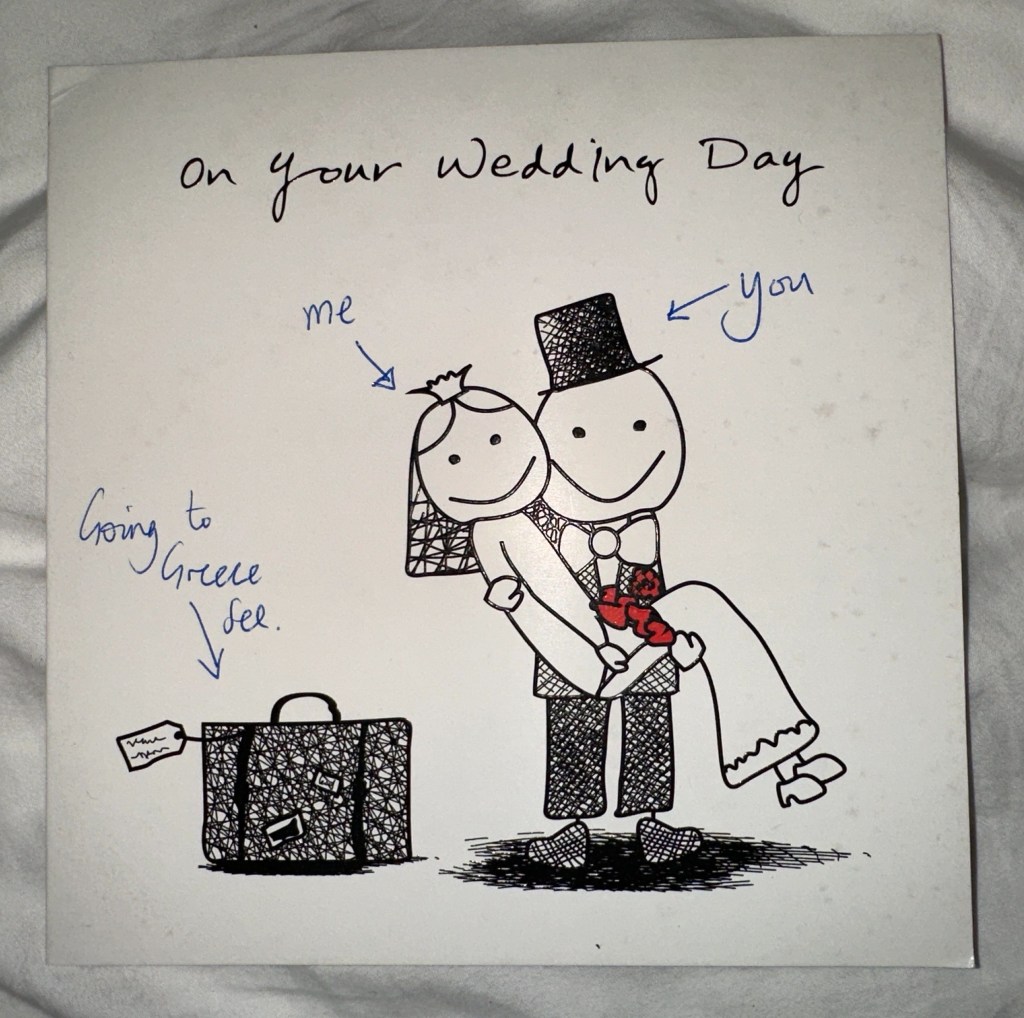
- Celebrating Zoë’s life helps me – reading all the tributes and kind messages that have been sent have provided a great comfort. They have made me cry and smile in equal measure. In the same way I am enjoying exploring memories of our life together, such as reading the old Valentine’s Day cards we sent, or looking at old photos and videos. I knew Zoë was a wonderful human, that is why I fell in love with her – but what I find comforting is that such a special person chose to spend the rest of their life with me. It’s a narcissist’s dream! What a privilege. I hope that her friends and family can take some comfort in a similar way – that she let us into her life.
- This is no-one’s fault, it’s just bad luck. Some may find that harder than if there was an obvious villain, but I find it easier – there is no-one to blame. As someone remarked, ‘why does this only happen to the good ones’ – I don’t think it does, we are just affected by it more. If we really want someone or something to blame – what about humanity? I don’t know for sure, but I think humanity could probably cure brain cancer if it put its mind to it – but we are limited by bureaucracy, greed, even our own imaginations. Cancer isn’t the only horrible thing happening to people in the world and even if we solved it, Zoe didn’t believe humanity should strive for immortality.
- There is such incredible kindness and love in the world – the people making teddies for the boys out of her clothes, the friends and family continually checking up on me, the offers of help, the chocolate cake delivered to our doorstep, the letters and cards, I could go on – thank you.
- This seems to be harder on the people who didn’t see her in her final months and weeks – or maybe not harder, just more shocking. The decline was quick, and therefore I suspect there is an element of denial or disbelief – both perfectly valid emotions. As a friend eloquently wrote: ‘she bore her illness with such grace it was hard to accept how ill she was’
- The boys keep me moving forward – there is no substantial time for reflection. There are moments, of course, but they are quickly punctuated by the reality of having two dependants – this is a kindness to me.
- Sharing this experience makes it easier – living this experience through my children, Zoë’s friends and family as well as my own, means I am yet to feel alone.
Our late Queen famously said ‘grief is the price we pay for love’ when addressing the bereaved families of September 11 attack victims. I agree, without love grief couldn’t exist. I feel my life is richer for loving and being loved by Zoë and as she herself wrote in her final letter to me – ‘our love will never end; it will just change’. She is right. To me, grief is part of that change.
 #teamzoe
Leave a comment